


 Français
 Deutsch
 Español

For businesses
Fleet management: operations on your vehicles
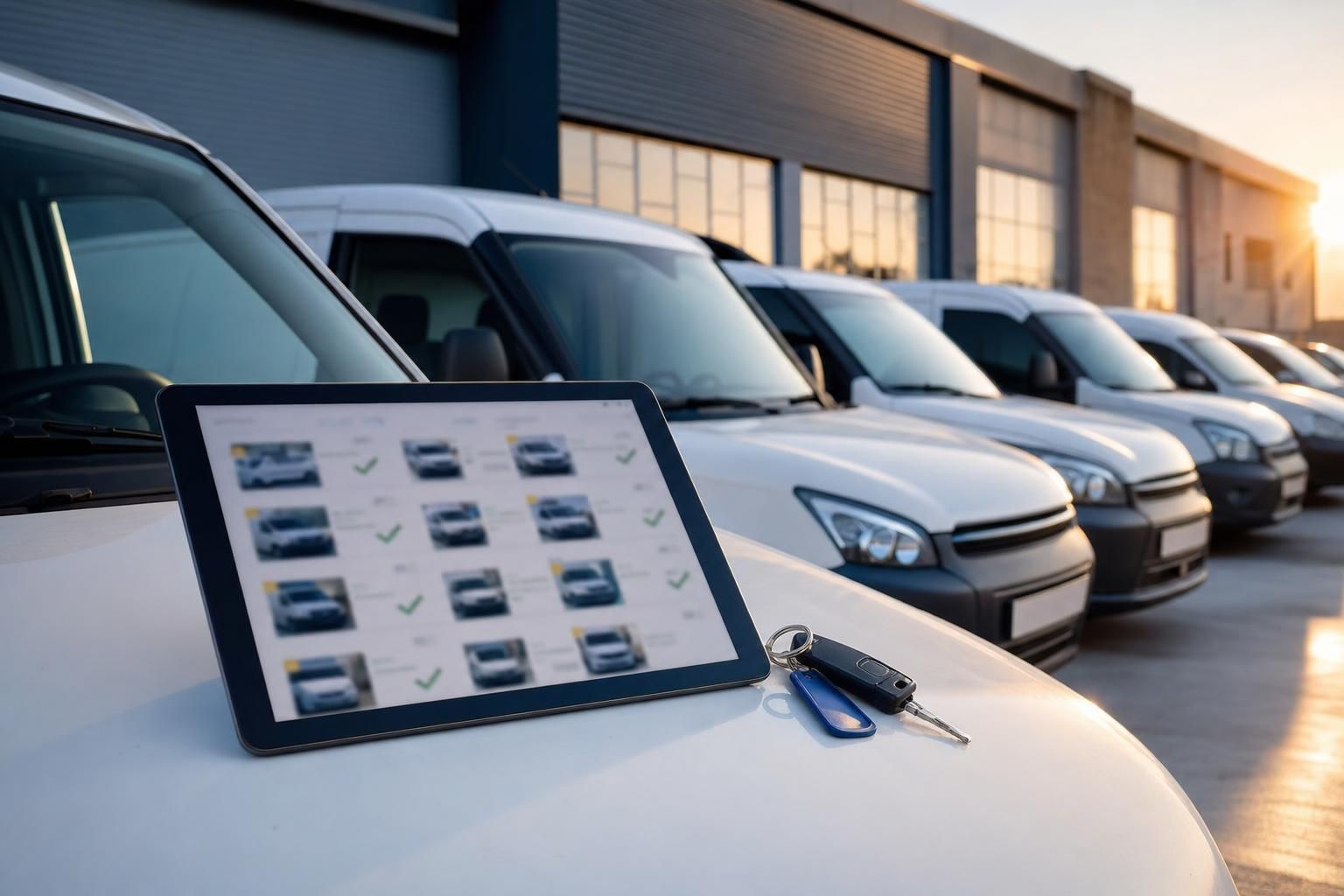
One employee starts on Monday and is waiting for a company car, another leaves the company and leaves theirs at a distant site, and three vehicles are due for their French roadworthiness test (contrôle technique) this month. We carry out these operations in the field, and the fleet manager stays in charge of the decisions.
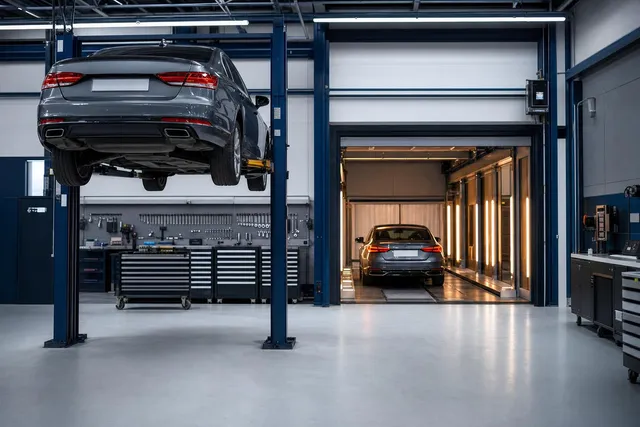
Illustrative photo
The operations a fleet manager can outsource
The fleet manager chooses the vehicles, negotiates the contracts, monitors costs and sets the allocation rules. That leaves the operations in the field: those that take an employee away from their work for a round trip to the garage, or that leave a vehicle stuck because there is nobody to move it. Outsourcing this part of fleet management means entrusting these journeys to a service provider who documents them.
| Operation | What we do | What you receive |
|---|---|---|
| Company car to be delivered | Driving to the employee, handover of keys, documents and accessories | Condition report, delivery note signed by the employee |
| Collection, repatriation | Collection from the employee or a site, return to the fleet | Condition report, inventory of keys and contents |
| Rotation between sites | Swapping vehicles between sites | Mileage recorded at each move |
| Servicing, roadworthiness test | Round trip to the garage or test centre, waiting if planned | Updates at each stage, documents handed over by the provider |
| End of a long-term lease (LLD) or lease with purchase option (LOA) | Preparation, decal removal if needed, handover at the return point | Condition report before the return, signed report |
| Audit and inventory | On-site check of each vehicle | Records reconciled with your fleet file |
A company car delivered to the employee
The new employee arrives: their vehicle is waiting for them at home or at their workplace. The delivery driver hands over the keys, the vehicle documents and the accessories (charging cable, safety kit, fuel card if you entrust it to us), carries out the digital condition report with the employee and has them sign the delivery note. The vehicle’s condition and mileage are recorded on the day the employee takes responsibility for it.
When a vehicle is renewed, the same visit can be used to take back the old one: condition report, inventory of keys and accessories, then return to the fleet, the garage or the return point.
Bringing back company vehicles left far away
An employee leaving the company, a long absence, an assignment completed at another site: the vehicle sometimes stays far from head office. We collect it from the employee or from the site, provided it is fit to be driven on the road, and bring it back wherever you want. The condition report lists what is returned: keys, documents, equipment, and any personal belongings left on board.
Rotations, servicing and roadworthiness tests
Rotating vehicles between sites balances out the mileage: the one that is driven a lot takes the place of the one that stays in the car park. Shuttles for servicing, tyres, bodywork, glazing and roadworthiness tests save employees from leaving their work: we drive the vehicle to the provider, wait on site if that is planned and bring it back. Washing, refuelling or recharging can be added if needed, directly or with partners depending on the service. Details are on the garage and roadworthiness test shuttles page.
End of contract: decal removal and return
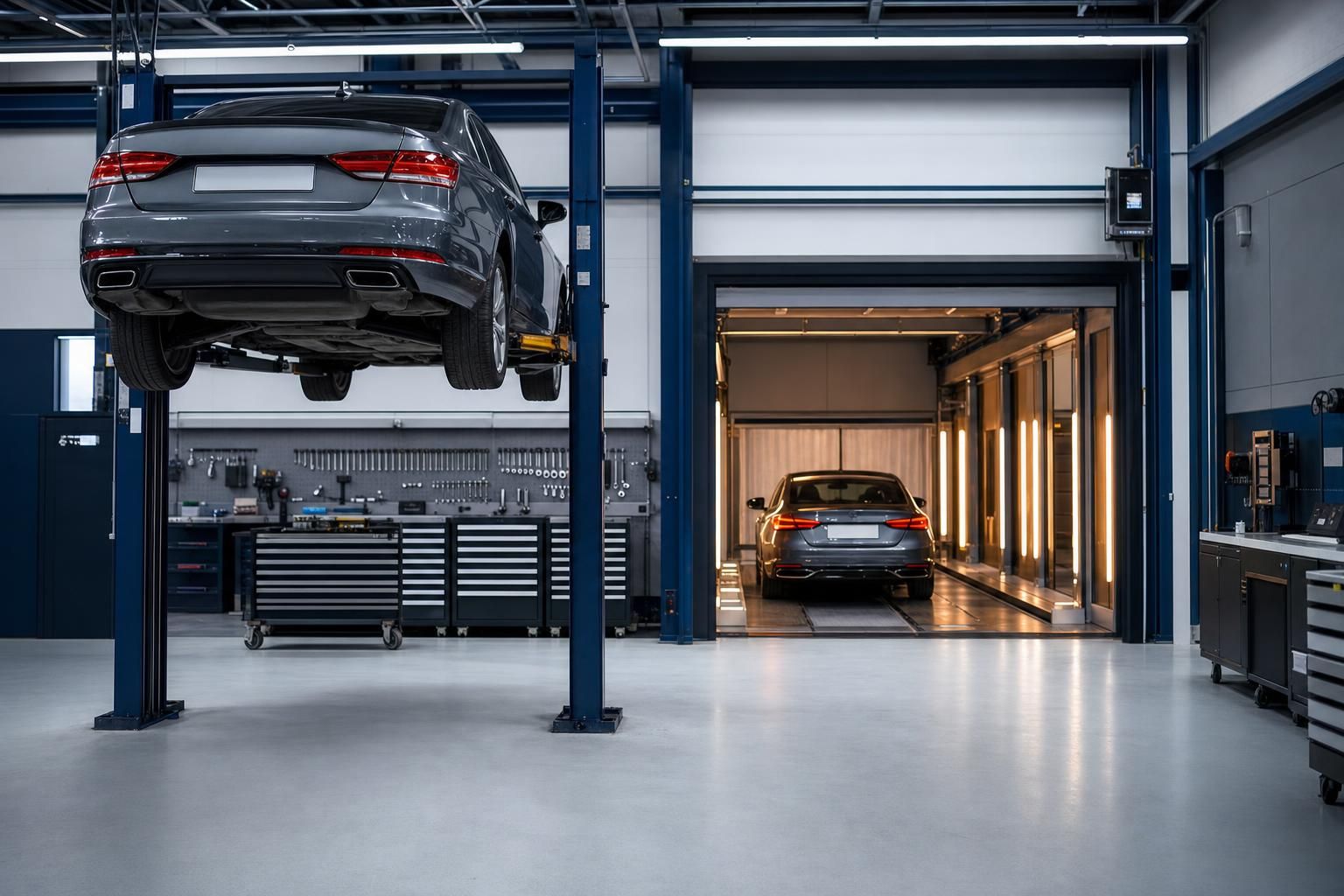
At the end of an LLD or LOA, the vehicle often still carries the company’s livery. Decal removal takes off logos, lettering and contact details, partially or completely, along with the adhesive residue depending on the condition of the surfaces. We then prepare the vehicle, carry out its condition report and drive it to the return point; the page on vehicle return at the end of an LLD or LOA details this process.
Audit and inventory: knowing who drives what
This often happens when a fleet manager leaves the company without a handover: nobody knows exactly who drives which vehicle, where the spare keys are or when the next roadworthiness test is due. We then go through the fleet vehicle by vehicle:
- document search and reconciliation with the fleet file;
- check of the registration, the VIN and the mileage;
- photos and digital condition report;
- check of the keys, the spares kept at head office, the equipment and the documents;
- reminders to employees about upcoming servicing and roadworthiness tests;
- reminder of the winter equipment required from 1 November in the mountain municipalities concerned.
This can be done at one or several sites. Our fleet audit page presents the method.
SMEs, construction, healthcare, local authorities: very different fleets
- SMEs: a few vehicles overseen by the management, who hand over the journeys to save their own time.
- Large companies: multi-site fleets, rotations and audits across several sites.
- Construction: vans, tippers, flatbeds and aerial work platforms delivered empty (vans and special vehicles), heavy goods vehicles by a delivery driver holding the corresponding licences.
- Healthcare establishments: service vehicles and medical transport vehicles, delivered empty to the workshop or to another site.
- Local authorities: service vehicles, technical vehicles, buses and coaches, subject to the applicable licences and insurance.
- Non-profit organisations: service vehicles and vans, for a one-off operation or regular follow-up.
Scoping your request
The form at the bottom of the page covers the essentials. Specify:
- the number of vehicles concerned and their types;
- the sites and addresses where we are to work;
- the operations required: deliveries, repatriations, shuttles, returns, audit;
- the frequency: one-off or recurring intervention, dates or deadlines;
- the person to contact at each site, and whether an up-to-date fleet file exists.
Method and traceability
How is your job carried out?
The request
You choose your need and describe the vehicle, the journey or the site, online or by phone. Your request is given a reference.
The quote
We assess the request and send you a proposal stating the amount and the applicable terms, before any confirmation.
The pick-up
The driver arrives at the agreed time and carries out the LudExpress EDL condition report: required photos, mileage, fuel or charge level, keys and documents, signature of the person handing over the vehicle.
The delivery
On arrival, the same process compares the vehicle with its condition at departure. The recipient signs, and you receive the PDF report for the job.
880+
Vehicles delivered since August 2024
- Time given back to your teamsYour employees stay at their posts: our drivers move, deliver and return the vehicles.
- Documented handoversLudExpress EDL condition report at departure and on arrival, signed, with one PDF report per job. See the EDL
- A single point of contactFrom quote to delivery, reachable by phone or WhatsApp during the journey.
- An insured businessProfessional liability and motor liability insurance (RC professionnelle and RC circulation) with HISCOX; the applicable cover is specified in the quote.
On a quote basis, no public prices
Request a quote
Describe your need in two short steps. Each request is assessed in light of the vehicle, the journey and your constraints: you receive a tailored proposal, then we set the day and time together.
- Monday to Friday7.30 am to 6.30 pm
- Saturday7.30 am to 12.30 pm
FAQ
Frequently asked questions
Another question? Write to us or call us, we will answer you.
All frequently asked questionsDo you offer fleet tracking software or a portal?
No. LudExpress carries out the operations on the vehicles and sends you the photos, records and signed reports after each job. You add them to your own fleet management tool or fleet file.
Do you work at sites outside Île-de-France?
Yes. From our head office in Paris 15th arrondissement, we operate in Île-de-France, in the Eure, throughout France, and in Europe after assessing each request. For a multi-site audit, we organise the order of visits and the travel is included in the quote.
Can regular interventions be scheduled?
Yes, operations can be one-off or recurring: shuttles every month, an audit every quarter, deliveries as new employees arrive. A single point of contact handles your file and knows your fleet from one intervention to the next.
What should we do with a company vehicle that can no longer be driven?
We only deliver vehicles that are fit to be driven on the road, and we drive them by road. An immobilised vehicle must first be towed or repaired. Once it is back in working order, we can collect it from the garage and bring it back to your fleet.
See also
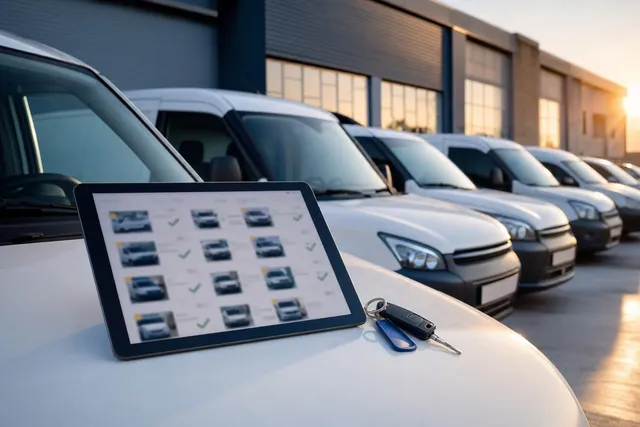 Fleet auditEvery vehicle, its keys and documents recorded, with condition reports and discrepancies with your register, on one or several sites.
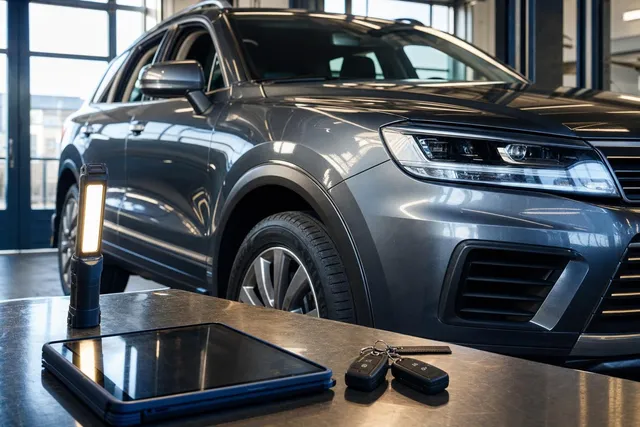 LLD and LOA lease returnsCleaning, decal removal, keys and documents gathered, photographed condition report, then handover at the point agreed by the leasing company.
 Garage and roadworthiness test shuttlesA driver takes your vehicles for servicing or to the body shop, waits if needed, then brings them back to the agreed address.