


 Français
 Deutsch
 Español
For businesses
Heavy goods vehicle, bus and coach delivery
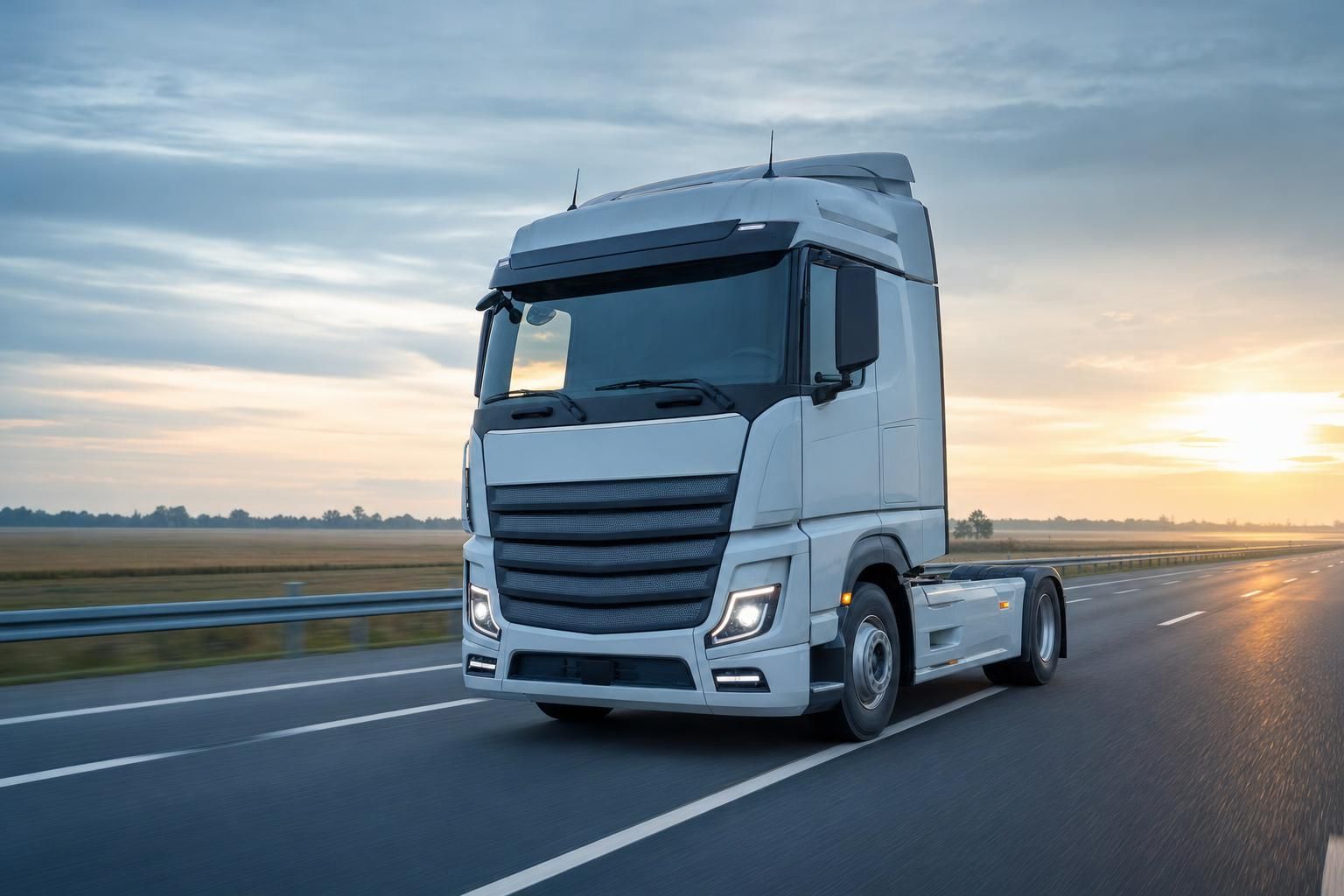
A tractor unit bought at the other end of France, a coach expected at the body shop, a rigid truck to be returned to the rental company: these vehicles only move with the right licence and an available driver. A delivery driver holding the corresponding licences drives them empty, from your site to the agreed address.
Illustrative photo
The truck is ready, your drivers are out on their rounds
A haulier buys a used tractor unit in Lyon while all its drivers are on the road. A rental company needs to collect a rigid truck returned several hundred kilometres from its branch. A coach operator sends a coach to the body shop before the season starts again. In each of these cases, taking a driver off the schedule costs a day of production, sometimes two with the return journey.
We take care of this move. A LudExpress HGV delivery driver collects the vehicle, drives it empty to its destination and hands it over with a digital condition report and a signed delivery note. These jobs are carried out subject to feasibility, licences and the insurance cover applicable to the vehicle, all checked with you before the quote.
There are many reasons to move an HGV:
- buying or selling a used vehicle;
- a visit to the workshop, the body shop or the French roadworthiness test (contrôle technique);
- delivery of a new vehicle after bodybuilding;
- return at the end of a rental or a contract;
- transfer between two depots or two branches.
Rigid trucks, tractor units, articulated vehicles and coaches
We deliver heavy vehicles up to 33 tonnes, as long as they run under their own power:
- rigid trucks, with their equipment (tipper, flatbed, box body, tail lift);
- tractor units on their own;
- articulated vehicles, tractor unit and semi-trailer, known in France as SPL;
- semi-trailers, coupled to the tractor unit that pulls them;
- buses and coaches, without passengers.
A coach needs a few extra precautions: holds empty and closed, passenger door locked, height and length taken into account for access to the arrival depot. For a truck fitted with a crane or a tail lift, the equipment stays in the road position for the whole journey.
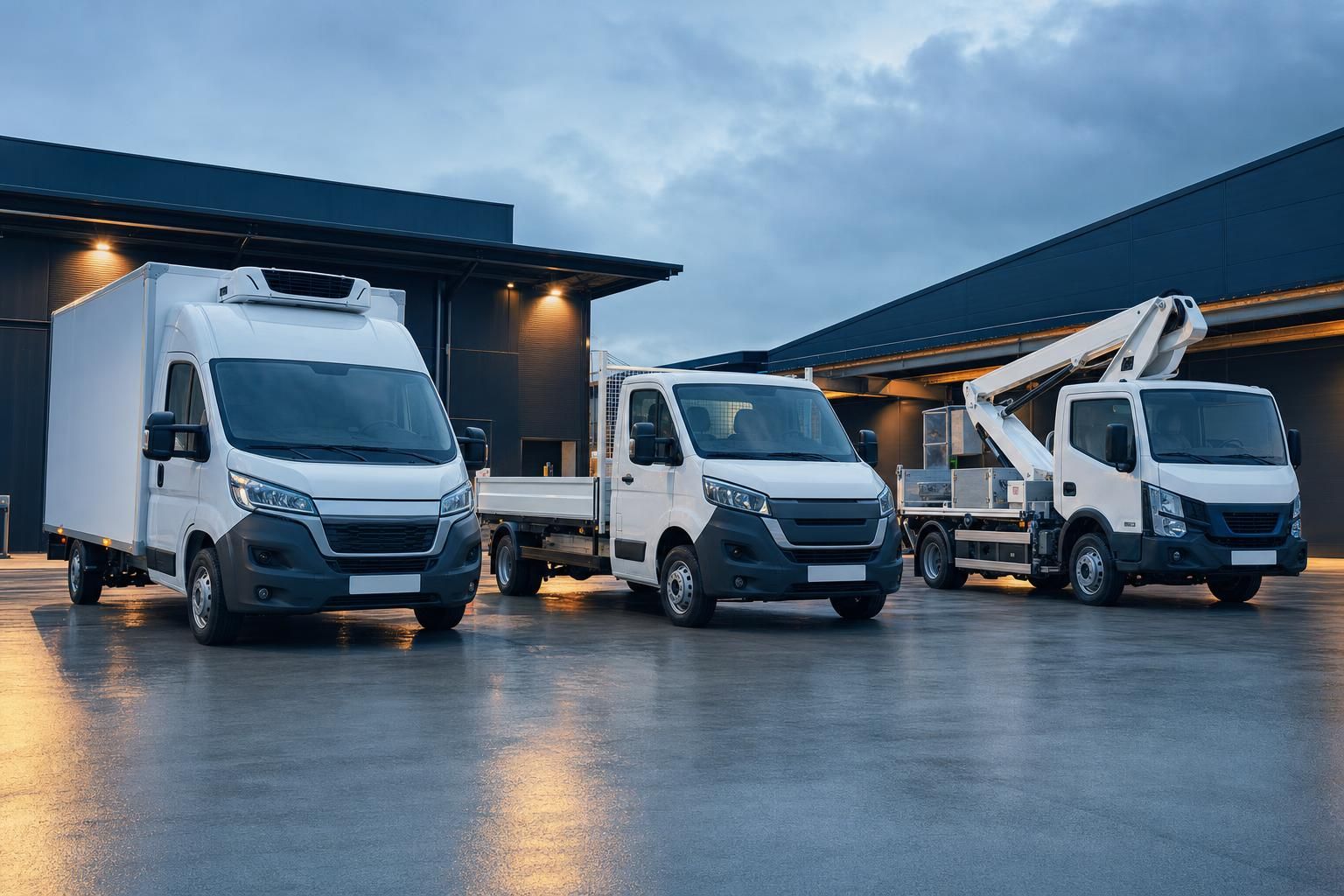
For vehicles under 3.5 t, including refrigerated vehicles, aerial platforms and medical vehicles, the page van and specialist vehicle delivery explains how we work.
Which licence for which vehicle
The licence category depends on the vehicle’s weight, what it tows and its use. This table reproduces the definitions published on service-public.gouv.fr:
| Vehicle | Licence | What the category covers |
|---|---|---|
| Truck from 3.5 to 7.5 t | C1 | Maximum authorised mass (MAM) over 3.5 t and not exceeding 7.5 t, 9 seats at most |
| Rigid truck or tractor unit over 3.5 t | C | MAM over 3.5 t with no upper limit, trailer of 750 kg at most |
| Tractor unit with semi-trailer, rigid truck with heavy trailer | CE | Category C vehicle with a trailer over 750 kg or a semi-trailer |
| Bus, coach | D | Passenger transport, more than 9 seats, driver included |
The delivery driver assigned to the job holds the corresponding licences. Before each quote, we check the category your vehicle requires from its vehicle registration certificate (carte grise): the MAM is shown in field F.2, the vehicle type in field J.1.
An empty, roadworthy vehicle
Delivery is always made empty: no goods, no load, no passengers. The vehicle must be able to travel on the road without assistance:
- roadworthiness test up to date;
- tyres, brakes and lights in good condition;
- tachograph working when the vehicle is fitted with one;
- fuel and urea (AdBlue) tank at the agreed level;
- equipment in road position: tipper lowered, tail lift raised, crane arm folded.
For a semi-trailer, specify which tractor unit will make the journey and whether it will already be coupled at the time of departure.
The documents that travel with the vehicle
Before departure, place in the cab:
- the vehicle registration certificate, and that of the semi-trailer or trailer;
- the current certificate of insurance;
- the report from the last roadworthiness test;
- the keys, the access badges and, if you entrust them to us, the fuel card or the electronic toll tag;
- instructions specific to the vehicle: retarder, automated gearbox, height, known points to watch.
Their presence is noted on the departure condition report and checked on delivery.
A route planned for a heavy vehicle
An HGV’s route is planned differently from a car’s. Before departure, we take into account:
- the vehicle’s height and weight in relation to bridges, tunnels and weight limits;
- traffic restrictions on HGVs over 7.5 t at weekends and on public holidays;
- low-emission zones along the route;
- the driving and rest times that apply to the vehicle;
- the opening hours of the departure and arrival sites, often strict for a depot or a workshop.
Tolls are paid in the HGV class: the quote includes them, along with fuel and the driver’s return journey.
Rental companies, hauliers and fleet managers
For a rental company, vehicle delivery puts a truck back where demand is waiting for it: the page vehicle rental companies presents these repositioning moves. For a fleet manager, it goes with the arrival of a new vehicle, a workshop visit or a lease return, as described on the page fleet management. For a haulier, it frees a driver, who stays on their rounds.
In all cases, the departure and arrival condition reports serve as a reference between the parties. Our guide to vehicle condition reports explains what they contain and how to read them.
Your quote request
Fill in the form with:
- the type of vehicle, its MAM and its height;
- whether it is a coupled combination, and with which tractor unit;
- the addresses and access hours of both sites;
- the preferred date and how flexible you can be;
- the name and phone number of the contacts on site;
- the reason for the move (purchase, workshop, return, transfer), which shapes the preparation.
The collection date is agreed in the quote; for an HGV, it also depends on the availability of a delivery driver holding the required licence. A single point of contact follows the file and keeps you informed by phone or WhatsApp during the journey.
Method and traceability
How is your job carried out?
The request
You choose your need and describe the vehicle, the journey or the site, online or by phone. Your request is given a reference.
The quote
We assess the request and send you a proposal stating the amount and the applicable terms, before any confirmation.
The pick-up
The driver arrives at the agreed time and carries out the LudExpress EDL condition report: required photos, mileage, fuel or charge level, keys and documents, signature of the person handing over the vehicle.
The delivery
On arrival, the same process compares the vehicle with its condition at departure. The recipient signs, and you receive the PDF report for the job.
880+
Vehicles delivered since August 2024
- Time given back to your teamsYour employees stay at their posts: our drivers move, deliver and return the vehicles.
- Documented handoversLudExpress EDL condition report at departure and on arrival, signed, with one PDF report per job. See the EDL
- A single point of contactFrom quote to delivery, reachable by phone or WhatsApp during the journey.
- An insured businessProfessional liability and motor liability insurance (RC professionnelle and RC circulation) with HISCOX; the applicable cover is specified in the quote.
On a quote basis, no public prices
Request a quote
Describe your need in two short steps. Each request is assessed in light of the vehicle, the journey and your constraints: you receive a tailored proposal, then we set the day and time together.
- Monday to Friday7.30 am to 6.30 pm
- Saturday7.30 am to 12.30 pm
FAQ
Frequently asked questions
Another question? Write to us or call us, we will answer you.
All frequently asked questionsHow much does HGV delivery cost?
Each HGV delivery is quoted individually, with no public price list and no per-kilometre rate. The amount depends on the distance, tolls in the HGV class, fuel, the driver's return journey, the lead time and the constraints specific to the vehicle.
Can you deliver a loaded truck?
No. Our HGV deliveries are always made empty, with no goods or equipment in the box body, in the tipper or on the flatbed. The vehicle must be unloaded before the driver arrives.
Do you deliver a semi-trailer on its own?
A semi-trailer can only be moved when coupled to a tractor unit. We therefore deliver the articulated vehicle, with the tractor unit you provide for the journey. Driving this combination requires a CE licence, which the driver assigned to the job holds.
Can a coach travel with passengers or luggage?
No, the bus or coach travels empty, with no passengers and no luggage in the hold. The delivery is used to move the vehicle itself, for example to a workshop, a body shop, a new depot or a buyer.
See also
 Fleet managementDelivery to employees, repatriations, servicing shuttles, returns and fleet inventories, carried out in the field for the fleet manager.
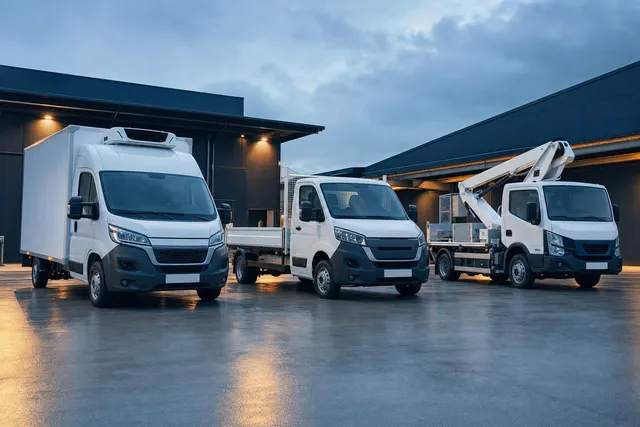 Vans and specialist vehiclesPanel vans, pick-ups, 4x4s, refrigerated vehicles, ambulances, hearses, tippers and aerial platforms driven empty to the worksite, the rental company or the workshop.